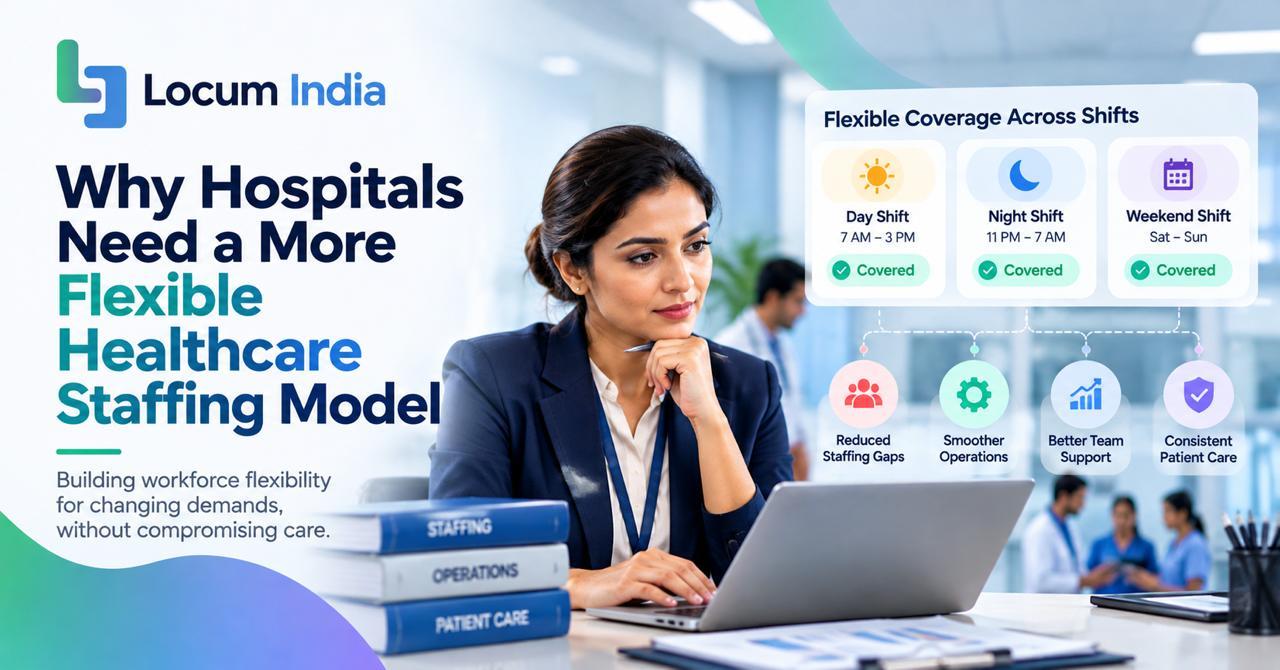
Hospitals operate in an environment where workforce requirements can change quickly.
A planned roster may look adequate when it is prepared, but actual staffing needs can shift because of employee absence, changing patient volumes, emergency admissions, additional procedures, seasonal demand or temporary vacancies.
Traditional staffing structures are designed primarily around predictable workforce requirements. But hospital operations are not always predictable.
This creates an important question for healthcare organisations:
Should every temporary staffing requirement be managed through a permanent staffing model?
Increasingly, hospitals may need a combination of permanent teams and flexible workforce options to respond effectively to changing operational requirements.
Healthcare facilities need a strong permanent workforce. Doctors, nurses, technicians and other professionals who understand the organisation, its processes and its culture remain central to hospital operations.
However, the number of professionals required at a particular time may vary.
A hospital may experience:
These situations do not necessarily create a permanent workforce requirement.
They create a temporary staffing requirement.
Treating every temporary requirement as a permanent hiring problem can make workforce planning less responsive to the realities of hospital operations.
Flexible staffing should not be viewed as a replacement for permanent healthcare teams.
The two models solve different problems.
Permanent employees provide continuity, institutional knowledge and long-term workforce stability.
Flexible healthcare professionals can provide additional capacity when requirements temporarily move beyond the hospital’s regular staffing level.
A more adaptable workforce model therefore combines:
Core permanent workforce + flexible staffing capacity
This allows hospitals to maintain their regular teams while having another option when short-term staffing requirements arise.
Flexible staffing can be particularly relevant when the duration or timing of a requirement does not justify a permanent appointment.
An unexpected absence can leave a scheduled shift uncovered.
Instead of relying entirely on overtime, internal adjustments or personal networks, hospitals can potentially access professionals who are available specifically for temporary shifts.
Recruiting the right permanent employee takes time.
A temporary staffing option can help support operations while the hospital continues its regular recruitment process.
Patient demand does not remain identical throughout the year.
Certain departments, days or periods may experience higher activity than others.
Flexible staffing can provide additional workforce capacity during these periods without permanently increasing staffing levels for a temporary requirement.
Some shifts can be more difficult to cover consistently.
Having access to healthcare professionals who are specifically available for particular days or shift timings can give hospitals another way to manage these requirements.
Hospitals may occasionally require additional workforce support because of increased OT schedules, diagnostic workloads, special clinics or temporary service requirements.
Flexible professionals can supplement the existing team for the period during which that additional capacity is needed.
The challenge with a short-term staffing gap is often not simply finding a healthcare professional.
It is finding the right professional at the right time.
Traditional approaches may involve multiple phone calls, WhatsApp groups, personal contacts or staffing agencies.
Each additional step can consume valuable operational time.
Technology-enabled staffing platforms can help structure this process by connecting specific requirements with professionals based on factors such as role, qualification, availability and location.
The objective is not merely to create a larger database of professionals.
It is to make temporary staffing requirements easier to communicate, match and manage.
Speed should never mean ignoring professional suitability.
Hospitals need confidence that healthcare professionals taking temporary assignments have the relevant identity and professional credentials for the role.
This makes verification an important part of any flexible staffing model.
At Locum India, identity and relevant professional credentials are reviewed before professionals become eligible for shifts.
Hospitals should still evaluate the professional and assignment requirements appropriate to their own organisation before confirming any engagement.
One of the most important benefits of workforce flexibility may be its ability to support the hospital’s permanent employees.
When staffing gaps remain unresolved, existing team members may need to absorb additional responsibilities, extend shifts or adjust planned schedules.
Occasional adjustments are part of hospital operations.
But repeated dependence on the same internal workforce to absorb staffing shortages can increase pressure on teams.
Flexible staffing provides hospitals with another workforce option when additional capacity is temporarily required.
The objective is not to replace existing teams.
It is to support them when demand exceeds planned staffing capacity.
Hospitals increasingly operate in an environment where patient demand, workforce availability and service requirements can change rapidly.
Workforce planning therefore needs both stability and responsiveness.
Permanent healthcare professionals provide the foundation.
Flexible staffing can provide additional capacity when circumstances change.
The future of hospital staffing may not be a choice between permanent employment and temporary staffing.
It may be a workforce model that intelligently combines both.
The right professional. The right shift. The right time.
That is where a more flexible healthcare staffing model can create value — for hospitals, healthcare professionals and ultimately the teams responsible for delivering patient care.
Healthcare staffing is evolving. Explore how technology, flexible work and on-demand workforce models could shape the future of healthcare staffing in India.
Staffing gaps affect more than hospital rosters. Explore how unfilled shifts can increase workload, disrupt operations and create pressure across clinical and support teams.
 Locum
Locum