Healthcare has always operated around shifts.
Hospitals need doctors, nurses, technicians and other healthcare professionals across mornings, evenings, nights, weekends and periods of unexpected demand.
Yet when a short-term staffing gap appears, the response can still be surprisingly manual.
Phone calls are made. WhatsApp messages are circulated. Personal networks are contacted. Existing employees are asked whether they can extend their shifts.
These approaches can work, but they also highlight a larger opportunity.
Healthcare staffing can become more responsive to the way hospitals actually operate.
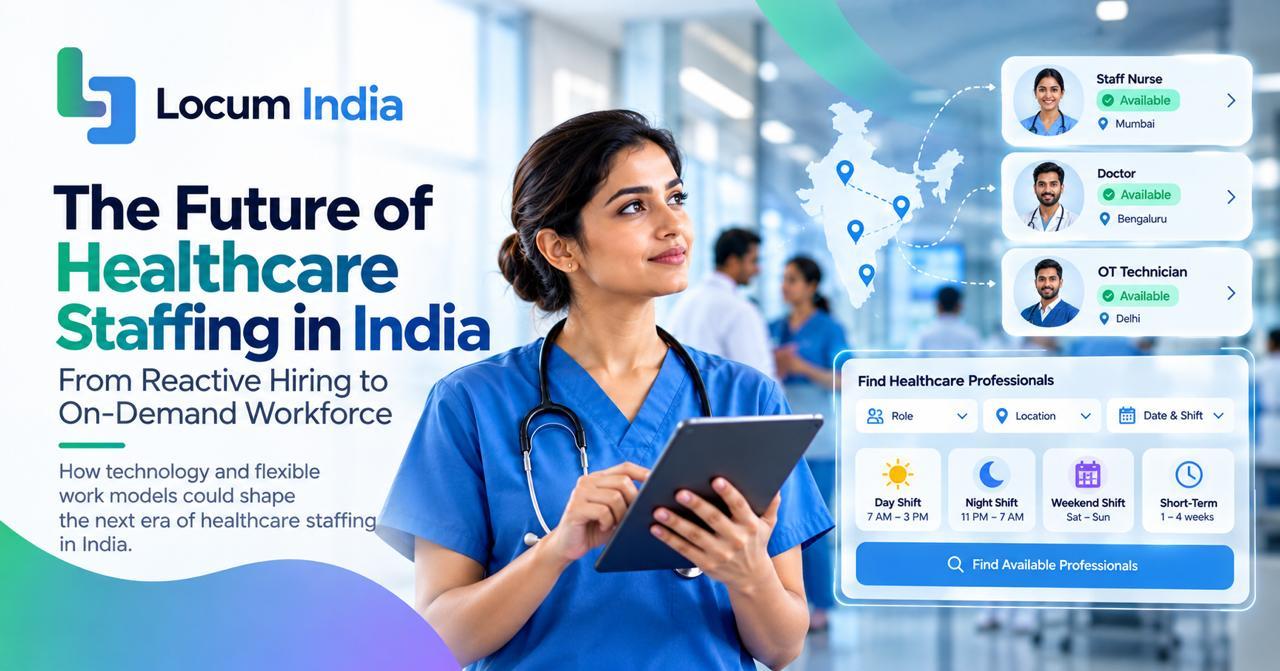
The next evolution may be a workforce model where permanent teams remain the foundation, while technology enables hospitals to access verified healthcare professionals for temporary requirements when additional capacity is needed.
Hospital workforce requirements do not remain constant throughout the day, week or year.
Patient volumes fluctuate.
Employees take planned and unplanned leave.
Departments experience different levels of activity.
Additional procedures may be scheduled.
Vacancies may remain open while permanent recruitment is underway.
A hospital may therefore have the right overall workforce strength and still experience a staffing gap for a particular role, department or shift.
This is where traditional workforce planning can face limitations.
Permanent recruitment is designed to solve long-term workforce requirements.
A four-hour, eight-hour or temporary staffing requirement is a different problem.
It may require a different solution.
Many short-term staffing problems become urgent because hospitals begin searching for a replacement only after a gap has appeared.
The process becomes reactive:
Gap identified → Calls and messages → Search for someone available → Verify suitability → Confirm the shift
Technology can help make this process more structured.
Instead of depending entirely on individual networks, hospitals can potentially access a pool of healthcare professionals whose roles, credentials and availability are already organised within a digital system.
The question changes from:
“Who can we call?”
to:
“Who is qualified and available for this requirement?”
That is a significant shift in workforce management.
Healthcare staffing is not simply about finding any available person.
The professional must match the requirement.
A hospital may need a particular role, qualification, department experience, location and shift availability.
Technology can help organise these variables more efficiently.
A structured staffing platform can potentially match requirements using factors such as:
This does not remove the hospital’s responsibility to evaluate the professional.
Instead, it can make the initial discovery and coordination process more efficient.
As healthcare staffing becomes more digital, trust becomes even more important.
Hospitals need to know who is entering their facility and whether the professional has the relevant credentials for the assignment.
Professionals also need clarity about the facility, role, shift timing and expectations before accepting an opportunity.
Digital staffing systems therefore need verification built into the process rather than treated as an afterthought.
At Locum India, identity and relevant professional credentials are reviewed before professionals become eligible for shifts.
Hospitals should continue to apply their own credentialing, onboarding and clinical governance requirements appropriate to each assignment.
The workforce side of healthcare is changing as well.
Not every healthcare professional necessarily wants every available hour of work to come from one permanent employment arrangement.
Some may want additional shifts alongside their regular responsibilities.
Others may prefer temporary assignments during periods when they are available.
Professionals may also value the ability to choose opportunities based on timing, location and professional role.
A technology-enabled locum ecosystem can make these opportunities more visible and structured.
Instead of discovering temporary work primarily through personal contacts or informal groups, professionals can potentially access clearly defined shift opportunities through a dedicated platform.
The growth of flexible staffing does not mean hospitals will stop employing permanent healthcare professionals.
Permanent teams remain essential to continuity, organisational culture, leadership and long-term service delivery.
The opportunity is to complement those teams.
A future workforce model could increasingly look like:
Traditional staffing models may not always match changing hospital needs. Explore how flexible staffing can help manage short-term demand while supporting existing teams.
Staffing gaps affect more than hospital rosters. Explore how unfilled shifts can increase workload, disrupt operations and create pressure across clinical and support teams.
 Locum
Locum