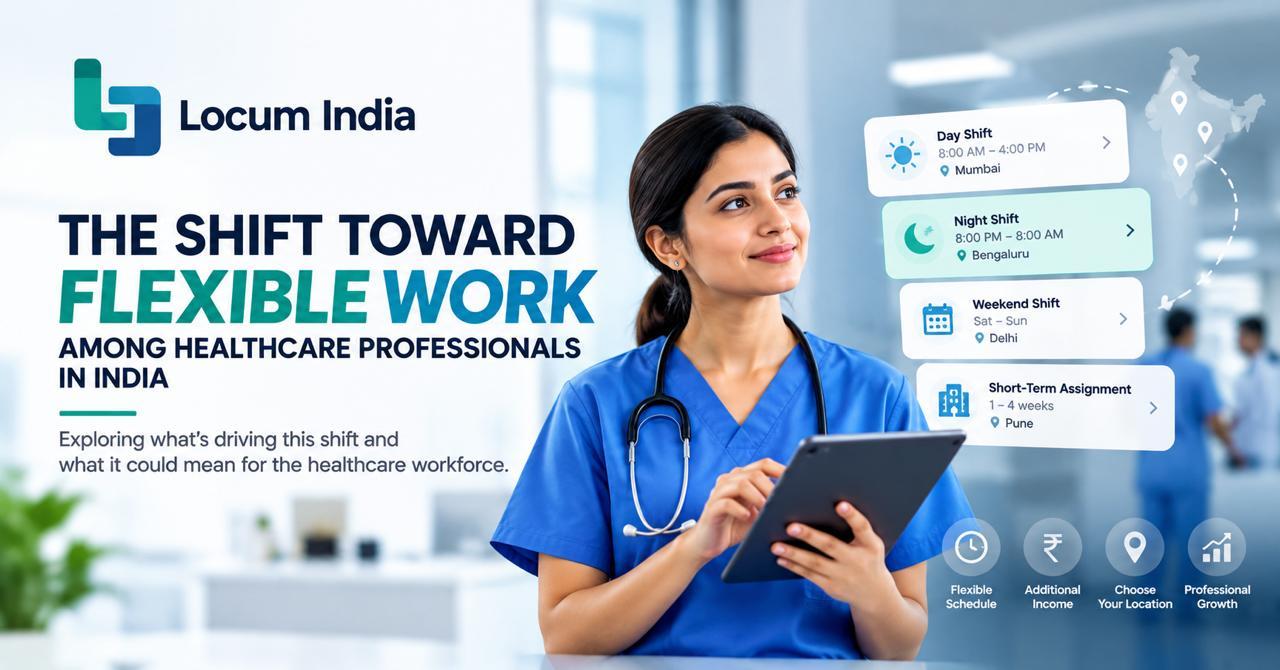
Flexible work is becoming a more visible part of conversations about the future of healthcare employment.
Healthcare has traditionally depended on fixed rosters, permanent staffing structures and predetermined working hours. Those models remain essential, particularly because hospitals need reliable teams around the clock.
At the same time, healthcare professionals may have periods when they are available for additional work outside their regular commitments.
This creates an opportunity for a more flexible layer of healthcare staffing — one where qualified professionals can take temporary or shift-based assignments based on their availability, skills and professional responsibilities.
Hospitals operate continuously.
Patients require care during the day, at night, on weekends and during holidays. As a result, healthcare facilities need structured staffing systems that provide dependable coverage across departments and shifts.
Permanent healthcare teams therefore remain the foundation of hospital operations.
Doctors, nurses, technicians, clinical assistants, physiotherapists and other professionals work within scheduled rosters designed around expected patient-care requirements.
But hospital staffing requirements are not always predictable.
A facility may suddenly need additional professionals because of:
These situations can create temporary gaps even when a hospital has an established permanent workforce.
Flexible work does not necessarily mean replacing permanent employment.
In healthcare, it can mean creating an additional staffing option alongside permanent teams.
For professionals, this may provide opportunities to take selected shifts when they are available.
For healthcare facilities, it may provide another way to respond to short-duration staffing requirements.
Several factors make this model increasingly relevant.
Hospital staffing requirements can change faster than permanent recruitment processes.
A department that is adequately staffed today may require additional support tomorrow because of absenteeism, increased admissions or an unexpected rise in workload.
Not every temporary requirement needs a permanent hire.
In some situations, the actual need may simply be:
The right professional for the right shift.
Healthcare professionals do not all have identical work schedules.
Some may be available for additional evening shifts, weekend assignments or selected days during the month.
Others may be between jobs, working part-time or looking for temporary professional opportunities.
Flexible shift-based work can allow professionals to consider opportunities according to their own availability rather than committing immediately to another permanent position.
Healthcare work is physical.
Unlike many digital professions, a doctor, nurse or technician generally needs to be present at the healthcare facility to perform the required clinical responsibilities.
This makes location particularly important.
A professional may be available for a shift, but the opportunity needs to be practical in terms of:
Technology can potentially make it easier to connect available professionals with relevant opportunities within practical locations.
Working in different healthcare environments can expose professionals to different teams, workflows and clinical settings.
For some professionals, selected locum shifts may provide additional professional exposure alongside their primary work.
However, every assignment should still match the professional’s qualifications, experience, competence and permitted scope of practice.
Flexibility should never come at the expense of appropriate clinical responsibility.
This distinction is important.
Flexible healthcare staffing should not mean informal healthcare staffing.
A healthcare facility still needs to know who is entering its clinical environment.
Similarly, a healthcare professional should understand where they are working, what responsibilities are expected and what the agreed shift conditions are.
A structured flexible staffing model should therefore provide clarity around:
Flexibility works better when the process surrounding it is structured.
In traditional employment, hospitals usually complete credential and employment checks during recruitment and onboarding.
With temporary or shift-based staffing, professionals may work with different healthcare facilities over time.
That makes verification an important part of the process.
Healthcare facilities need confidence that professionals accepting clinical shifts have appropriate identity and relevant professional credentials.
Professionals also need clear information about the healthcare facility and the assignment they are considering.
A technology-enabled staffing model can help bring greater structure to this interaction.
Many temporary healthcare staffing requirements are still communicated through personal networks, phone calls, messaging groups and local references.
These channels can work, but they can also be fragmented.
A professional may never hear about an appropriate shift simply because the requirement was shared in a different network.
Similarly, a hospital may struggle to identify an available professional even when someone with the right profile is nearby.
Technology can help make this process more organised by connecting:
Healthcare facility requirements + Verified professional profiles + Availability + Location
Instead of searching through multiple informal channels, facilities and professionals can potentially interact through a more structured system.
Flexible staffing can provide hospitals with an additional workforce option for specific short-duration requirements.
It may be particularly relevant when a facility needs:
This does not eliminate the need for permanent employees.
Instead, it can create another layer of workforce flexibility around the hospital’s core team.
For healthcare professionals, flexible shift work can provide greater choice over when they take additional assignments.
Depending on individual circumstances, potential benefits may include:
But flexibility also brings responsibility.
Professionals should consider their existing workload, rest, contractual obligations, competence and professional responsibilities before accepting additional shifts.
More available work does not automatically mean every available shift should be accepted.
The future of healthcare staffing may not be a choice between permanent employment and flexible work.
Both models can coexist.
Hospitals can continue to depend on strong permanent teams while using verified temporary professionals when specific short-term requirements arise.
A future healthcare workforce could therefore include:
Core Permanent Teams + Flexible Verified Workforce
The permanent team provides continuity and institutional stability.
The flexible workforce provides additional capacity when and where it is needed.
Used appropriately, these models can complement each other rather than compete with each other.
Locum India is building a technology-enabled platform focused specifically on healthcare shift staffing.
The objective is to make temporary healthcare staffing more structured by connecting healthcare facilities with verified healthcare professionals for hourly, shift-based and temporary requirements.
Healthcare facilities will be able to post requirements with relevant information such as professional role, qualification, department, shift duration and rate.
Eligible professionals can then discover opportunities that match their professional profile and availability.
The planned workflow includes:
Post Requirement → Match → Accept → OTP Check-in → Complete Shift
Verification is built into onboarding, with identity and relevant professional credentials reviewed before professionals become eligible for shifts.
Rather than replacing permanent healthcare employment, Locum India is designed to help create a structured flexible staffing layer around the existing healthcare workforce.
Healthcare will always require people to be available when patients need them.
The challenge is that workforce availability and healthcare demand do not always align perfectly.
Flexible healthcare staffing can help address part of that mismatch — but only when flexibility is combined with appropriate verification, clear responsibilities and structured processes.
For healthcare professionals, the opportunity is not simply to work more.
It is to have greater visibility and choice over appropriate additional shifts.
For healthcare facilities, the opportunity is not simply to find more people.
It is to find appropriately qualified professionals when a genuine staffing requirement arises.
That is the shift that technology can help enable.
Healthcare staffing is evolving. Explore how technology, flexible work and on-demand workforce models could shape the future of healthcare staffing in India.
Traditional staffing models may not always match changing hospital needs. Explore how flexible staffing can help manage short-term demand while supporting existing teams.
 Locum
Locum